
Looking for the best salt for high blood pressure?
If you have high blood pressure, you know that conventional salts like sea salt and table salt are out of the question without major adjustments to measure. If you didn’t know, check out our latest blog on sea salt and high blood pressure so you can get dialed in to the current information.
It can be annoying and tedious to check that you’re getting the right amount of sodium and not overdoing it- risking your health in the process. Conventional salts are riddled with contaminants and the nutrient content is incredibly low compared to Boulder Salt. Boulder Salt has been specially curated using leading edge science. It is a unique blend of essential salts with low sodium and a high nutrient content that many people have reported benefiting from! Boulder Salt may help you to maintain healthy blood pressure levels.
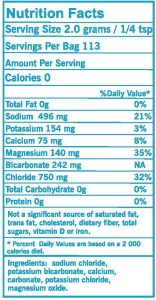
In this article, we showcase the value of Boulder Salt. It has high magnesium and potassium content to balance out its sodium. These studies present that it is scientifically proven to support blood pressure wellness. Boulder Salt Company offers a healthy balance of Magnesium, Potassium, and Calcium with a low sodium content. Three servings at ¼ of a teaspoon = 63% of the daily recommended value for sodium. It’s the first of its kind and is helping many people improve their health, based on their reports.
Unchecked High Blood Pressure is Dangerous… (source – CDC)
- Having high blood pressure puts you at risk for heart disease and stroke, which is the leading cause of death in the United States?
- Nearly half of adults in the United States (47%, or 116 million) have hypertension
- Only 24% of people with high blood pressure have their condition under control
Building Blocks for Life: You Need Sodium, Magnesium, and Potassium
Magnesium and Potassium are important minerals for the body to function optimally.
Magnesium is a mineral that’s crucial to the body’s function. Magnesium helps keep blood pressure normal, bones strong, and the heart rhythm steady. (source)
Potassium is an essential mineral that is needed by all tissues in the body. It is sometimes called an electrolyte because it carries a small electrical charge that activates various essential cell and nerve functions. Its main job is to help maintain normal levels of fluid inside our cells. So, it is very important to ensure you’re getting the correct amount of potassium from a clean source. (source)
Sodium, potassium’s partner, maintains normal fluid levels outside of cells. Potassium also helps muscles to contract and supports normal blood pressure already within a normal range. (source)
Deeper Insight into Magnesium… (source – NIH)
- Magnesium helps out 300+ enzyme systems that regulate multi-faceted biochemical reactions in the body. These involve: protein synthesis, muscle and nerve function, blood glucose control, and blood pressure regulation
- Magnesium is essential for energy production, oxidative phosphorylation, and glycolysis.
- It contributes to the development of bone and is required for the synthesis of DNA, RNA, and the antioxidant glutathione.
- Magnesium assists in the active transport of calcium and potassium ions across cell membranes. This is incredibly important to nerve impulse conduction, muscle contraction, and normal heart rhythm.
Deeper Insight into Potassium… (source – NIH)
- Potassium is active in all tissues of the body and is needed for normal cell function because of its role in maintaining intracellular fluid volume and transmembrane electrochemical gradients (in other words… a healthy pH)
- Potassium has a very important relationship with sodium, the main regulator of extracellular fluid volume, which includes plasma volume.
Sodium, Magnesium, and Potassium: A Properly Balanced Relationship Matters (source)
In this study looking at the effects of a balanced relationship between magnesium, sodium, and potassium it was concluded that: “Replacing common sodium salt with a low sodium, high potassium, high magnesium mineral salt could offer a valuable non-pharmacological approach to lowering blood pressure in older people with mild to moderate hypertension.” (source)
“Let thy food be thy medicine” – Hippocrates
Does Age Play a Factor in How Much Magnesium and Potassium I Should Take Daily to Reduce High Blood Pressure? (source – NIH)
As we age the science suggests that you will need to increase your magnesium and potassium intake to maintain the proper function of the body’s vital systems. Biological Women who are pregnant and/or lactating require different variables than biological men. Of course, you should always consult with your healthcare professional to make changes that are right for your unique situation.
Recommended magnesium intake for biological adult males
- Ages 19 – 30 years: 400 mg
- Ages 31 – 50 years: 420 mg
- Ages 51+ years: 420 mg
Recommended magnesium intake for biological adult females
- Ages 19 – 30 years: 310 mg
- Ages 31 – 50 years: 320 mg
- Ages 51+ years: 320 mg
Recommended magnesium intake for biological adult females who are pregnant and/or lactating
- Ages 19 – 30 years
- Pregnant: 350 mg
- Lactation: 310 mg
- Ages 31 – 50 years
- Pregnant: 360 mg
- Lactation: 320 mg
Recommended potassium intake for biological adult males
- Ages 19 – 50 years: 3400 mg
- Ages 51+ years: 3400 mg
Recommended potassium intake for biological adult females
- Ages 19 – 50 years: 2600 mg
- Ages 51+ years: 2600 mg
Recommended potassium intake for biological adult females who are pregnant and/or lactating
- Ages 19 – 50 years
- Pregnant: 2900 mg
- Lactation: 2800 mg
Magnesium’s Major Role in Cardiovascular Health & High Blood Pressure: (source – NIH)
There have been many studies that have examined the relationship between magnesium intake and heart disease. Individuals who have closer to normal levels of magnesium in their bodies are 38% less likely to suffer from a sudden cardiac related death than individuals who don’t, according to reasearch. An extensive review of studies found that higher levels of magnesium were associated with a signifigantly lower risk of heart disease.
Potassiums Major Role in Cardiovascular Health & High Blood Pressure: (source – NIH)
High blood pressure, a major alarm for coronary heart disease and stroke, affects around one-third of Americans. The results from several studies throughout the years suggest, low potassium intakes increase the risk of high blood pressure, especially when paired with high sodium intakes. Higher potassium intakes though, may help decrease blood pressure, partially by increasing vasodilation and urinary sodium excretion, which in turn reduces plasma volume. This effect may be most pronounced in people that are sensitive to conventional salts.
Results from most clinical trials show that potassium supplementation reduces blood pressure. Patients with normal blood pressure who were not taking antihypertensive medications significantly reduced their blood pressure through increased potassium intake. Adults found that 1,640 mg per day of higher potassium intake was associated with a huge 21% lower risk of stroke as a result of lowered blood pressure. It also points to a reduction in coronary heart disease as a result.
The FDA has approved the following health claim: “Diets containing foods that are a good source of potassium and that are low in sodium may reduce the risk of high blood pressure and stroke” Overall, the results from various studies point toward increased consumption of potassium will most likely have a favorable effect on blood pressure.
Boulder Salt is the Perfect Salt For You if You Have High Blood Pressure…
As we looked at previously, the increased intake of magnesium and potassium in a low sodium salt is a viable non-pharmacological approach to reducing blood pressure. Boulder Salt is a low sodium salt with high levels of magnesium, potassium, and calcium that can support healthy blood pressure levels that are already within a normal range. All of these are essential minerals for the function of many systems within the body but are particularly useful to everyday people looking to reduce their risk of high blood pressure by maintaining healthy levels.
Boulder Salt is the best salt on the market if you have high blood pressure because of its high mineral content and low sodium levels. It’s a performance salt, designed to keep athletes at peak performance. It’s a perfectly healthy and flavorful alternative for anyone who enjoys salt and wants to reduce their risk of hypertension by taking steps now to support healthy blood pressure levels that are already within a normal range.
Benefits of Boulder Salt:
- 40% less sodium per serving than traditional table salt and sea salt
- A balanced electrolyte profile significantly improves hydration
- Excellent source of magnesium
- Helps maintain healthy blood pressure
- Promotes a healthy nervous system
- Prevents and/or eliminates muscle cramping during intense athletic training
- Supports the neutralization of metabolic acids and helps maintain a healthy pH level
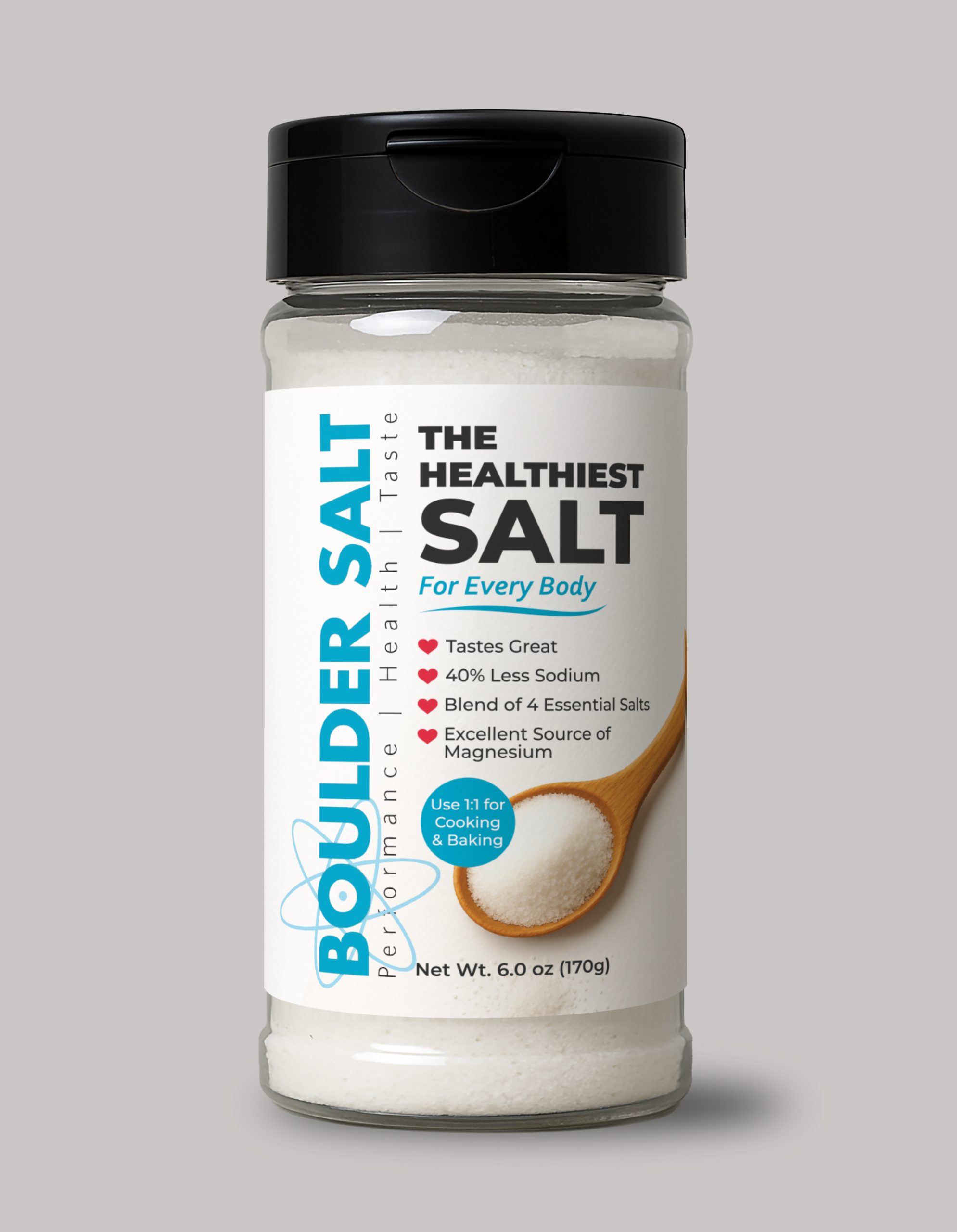
Boulder salt is the best healthy salt alternative that contains high levels of Magnesium, Potassium, and Calcium with 40% less sodium than conventional salt!
- Magnesium: 140 mg per ¼ tablespoon serving
- Potassium: 150 mg per ¼ tablespoon serving