What Is the Best Salt for High Blood Pressure? (2026 Guide)

Stethoscope and red heart representing the best salt for high blood pressure and cardiovascular care
Stethoscope and red heart symbolizing heart health, hypertension management, and the importance of choosing the right salt for blood pressure control

Last updated: February 2026

If you’re searching for the best salt for high blood pressure because you have hypertension and want to enjoy flavorful meals without spiking your readings, you’re not alone. Many people ask: “I have high blood pressure but love salt—what salt can I use if I have hypertension?” or “What salt is safe for high blood pressure that actually tastes good?”

The good news: Recent guidelines from the World Health Organization (WHO, 2025) and the American Heart Association/American College of Cardiology (AHA/ACC, 2025) now strongly support switching to potassium salt for high blood pressure or other potassium-enriched salt substitutes. These options reduce sodium while boosting potassium, which helps counter sodium’s effects on blood vessels and fluid balance. Traditional salts like table, sea, or Himalayan don’t offer this dual benefit.

In this comprehensive guide, we’ll explore why regular salt raises blood pressure, the ideal mineral balance, comparisons, and practical tips so you can choose a heart healthy salt option that fits your life. 

Why Regular Table Salt Raises Blood Pressure

Sodium is essential in small amounts, but excess causes your body to retain fluid, increasing blood volume and pressure on artery walls. Most Americans consume around 3,400 mg of sodium daily—far above the AHA’s recommended limit of 2,300 mg (ideally 1,500 mg for those with hypertension). This contributes to elevated blood pressure, heart strain, and higher risks for stroke and cardiovascular disease.

Potassium plays the opposite role: It relaxes blood vessels, promotes sodium excretion through urine, and improves the sodium to potassium ratio for blood pressure control. A poor ratio (high sodium, low potassium) is a key driver of hypertension—fixing it through diet or smart salt choices can make a real difference. See how Boulder Salt helps balance sodium and potassium for heart health.

The Ideal Sodium-to-Potassium Ratio for Blood Pressure

Research shows the ideal sodium to potassium ratio favors more potassium to offset sodium. Meta-analyses of trials find that potassium-enriched salts lower systolic blood pressure by about 4–5 mm Hg and diastolic by 1–2 mm Hg on average. Bigger real-world benefits include reductions in major cardiovascular events, stroke, and mortality.

The 2025 WHO guideline on lower-sodium salt substitutes recommends potassium-enriched versions as an effective, affordable way to reduce sodium and boost potassium at the population level. The 2025 AHA/ACC guideline for hypertension management gives a Class 2a recommendation (reasonable/useful) for potassium-based salt substitutes to prevent or treat elevated BP and hypertension, especially when salt is added during home cooking or seasoning (with monitoring advised for those with CKD or potassium-affecting medications).

Does Magnesium Help High Blood Pressure? (And Other Key Minerals)

Beyond potassium, does magnesium help high blood pressure? Yes—magnesium supports vessel relaxation and heart rhythm, while calcium aids muscle function. The best electrolyte balance for hypertension includes these minerals alongside reduced sodium.

Blends that add magnesium, calcium, and bicarbonate (for alkalinity) go further than basic potassium substitutes, supporting overall hydration and cardiovascular health.

Are Sea Salt and Himalayan Salt Better for Hypertension?

Many wonder: Is sea salt better than table salt for hypertension? or Does Himalayan salt lower blood pressure?

Short answer: No meaningful advantage. Sea salt, Celtic sea salt, and Himalayan pink salt contain trace minerals (magnesium, calcium, iron), but amounts are tiny and don’t impact blood pressure significantly. They still deliver ~33–39% sodium by weight—similar to table salt—and offer no proven edge over regular salt for hypertension management. Studies and reviews confirm: Fancy salts like Himalayan are mostly marketing; total sodium intake matters most.

What About Potassium Salt Substitutes? (Evidence from WHO & AHA)

Potassium salt for high blood pressure or salt with potassium for blood pressure is where evidence shines. The 2025 WHO guideline endorses replacing regular salt with potassium-enriched versions to lower BP and CV risk. The AHA/ACC echoes this, recommending them especially for home use.

These substitutes taste similar to regular salt (minimal bitterness in modern formulas) and provide measurable benefits without major diet changes. Landmark evidence comes from the Salt Substitute and Stroke Study (SSaSS), a large trial showing lower stroke (rate ratio 0.86), major CV events (0.87), and all-cause death (0.88) with a 75% NaCl / 25% KCl substitute .

Comparing Salt Options – Data and Visual Breakdown

To answer Himalayan salt vs low sodium salt for blood pressure, sea salt vs potassium salt for hypertension, or Morton Lite Salt vs Himalayan salt for blood pressure, look at the facts. This visual shows Boulder Salt’s lower sodium (~22%) with meaningful potassium (9%), magnesium (9%), calcium (5%), and bicarbonate (21%)—superior for electrolyte salt vs table salt balance.
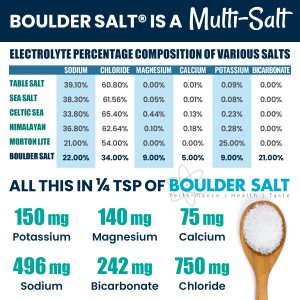
Electrolyte composition comparison table of table salt, sea salt, Himalayan salt, Morton Lite, and Boulder Salt showing sodium, potassium, magnesium, calcium, and bicarbonate percentages plus mg per ¼ tsp serving for high blood pressure management
Electrolyte composition of common salts (percentage by weight) and Boulder Salt’s per-serving breakdown in ¼ tsp.

For quick reference, here’s a simplified text table summarizing the key differences:

Salt Type

Sodium %

Potassium %

Magnesium %

Calcium %

Bicarbonate %

Notes for High BP Management

Table Salt

39%

Trace

None

Trace

None

High sodium; no balancing minerals

Sea Salt (typical)

38–39%

Trace

Trace

Trace

None

Similar to table salt; minimal benefit

Himalayan Pink

37%

Trace

Trace

Trace

None

Trace minerals too small to impact BP

Morton Lite

21%

25%

None

None

None

Good potassium boost, but no Mg/Ca

Boulder Salt

22%

9%

9%

5%

21%

Balanced electrolytes; lower sodium + added minerals for heart support

Best Tasting Low-Sodium Salt Options for Daily Use

Searching for the best salt for high blood pressure that tastes good or low sodium salt that doesn’t taste bitter? Many report basic potassium chloride has a metallic taste, but multi-mineral blends improve palatability.

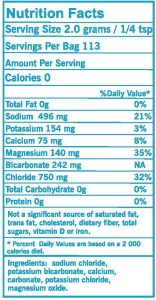
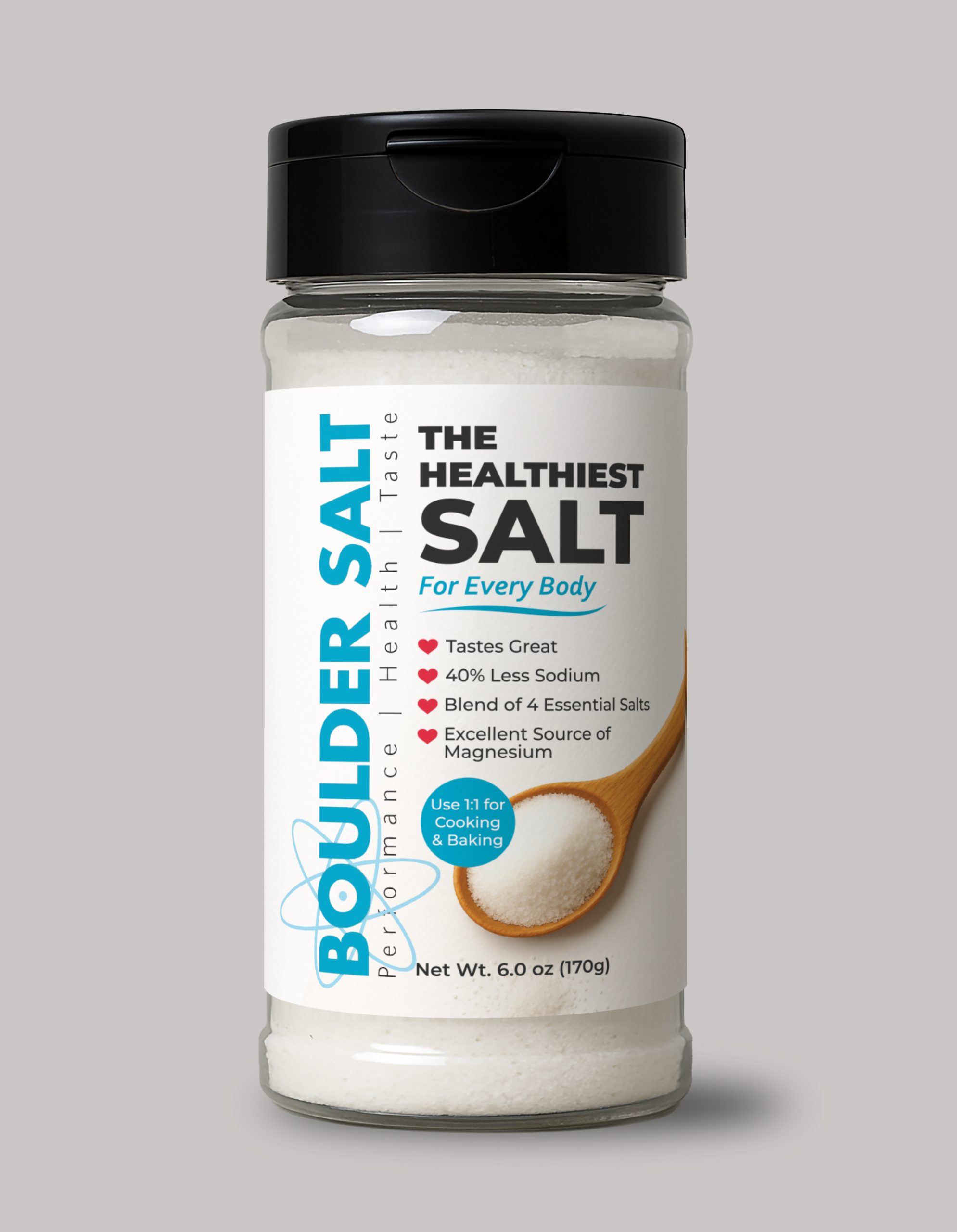
Boulder Salt fits here: With ~40% less sodium per serving (496 mg in ¼ tsp vs. ~590–600 mg in table salt) plus added electrolytes, it delivers mild, clean flavor for cooking, baking, or seasoning—making it a best cooking salt for someone with hypertension or heart healthy salt that tastes good. Discover why Boulder Salt is considered the best low-sodium salt.

Practical Tips & Recipes for Low-Sodium Living

Is Potassium Salt Safe for High Blood Pressure? (Doctor Advice)

Is potassium salt safe for high blood pressure? Yes for most, per guidelines—but consult your doctor first, especially with kidney disease, potassium-sparing meds, or hyperkalemia risk. Monitor levels if needed.

This article is for informational purposes only and is not a substitute for professional medical advice. Always consult your physician before making dietary changes, especially if you have kidney issues or take medications that affect potassium levels.

Final Verdict: What Salt Is Actually Best?

The best salt substitute for high blood pressure? Potassium-enriched or multi-mineral low-sodium options like Boulder Salt align with 2025–2026 evidence from WHO, AHA/ACC, and trials like SSaSS. They support better mineral balance, taste good for daily use, and help manage hypertension sustainably.

FAQ Frequently Asked Questions

What is the best salt for high blood pressure?

Potassium enriched or multi-mineral low sodium salts like Boulder Salt are currently the strongest evidence-based choice according to 2025 WHO and AHA guidelines.

Is Himalayan salt or sea salt better for hypertension?

No – Both are still high in sodium with negligible health benefits for blood pressure. Boulder Salt is a better option.

How much sodium is safe if I have high blood pressure?

The AHA recommends no more than 1,500 mg daily for most people with hypertension.

Is potassium salt safe for everyone?

Safe for most, but consult your doctor if you have kidney disease or take certain medications.

Can I use Boulder Salt if I follow the DASH diet?

Yes – its lower sodium and added electrolytes make it an excellent fit for DASH or any heart-healthy eating plan.


Additional content placeholder

A close-up of a sweating woman working out, illustrating the need for the rapid electrolyte replenishment provided by Boulder Salt during intense exercise
Performance Questions
How is Boulder Salt different from other salt products meant for athletes?

Most performance related salt products on the market are close to 100% sodium. Our bodies need a variety of electrolytes to perform at optimal levels – not just sodium. Boulder Salt provides a robust, alkaline blend of electrolytes, including sodium, potassium, magnesium and calcium. And in a combination that approximates what should naturally exist in the body. This ratio can help athletes optimize their performance. 

It varies depending on your activity level and sweat rate. In general 4 servings is common for everyday use, up to 6 servings for endurance athletes.

If you are under the care of a physician for a medical condition, consult your doctor first.

Boulder Salt is unique in that it can be taken alone, added to water, or mixed with other beverages to up their electrolyte value. It also gives you the option to make your own sports drink – adding flavors and/or sweeteners that work for you.

Can I mix Boulder Salt with my sports drink? Or add it to just plain water?

Yes. If you’re looking to enhance your electrolyte levels, Boulder Salt® is an ideal way to do so! It can be added to both water and sports drinks. You will likely be surprised at how mellow it tastes in water alone. And it will not significantly alter the taste of most beverages. However, Boulder Salt is alkaline, so if you add it to an acidic sports drink (which many are), you can expect to see the drink temporarily “bubble” or foam-up.

Athletes have used Boulder Salt® during all phases of a competitive event – whenever they are accustomed to drinking water or another sports drink. It’s balanced level of electrolytes make it an ideal addition to your electrolyte replacement regime. It can help you shore up electrolytes, hydrate quickly and help prevent or eliminate cramping.


If you are undergoing treatment for a medical condition, consult your physician.

Boulder Salt® is a soft, mellow-tasting salt. The varying size and shapes of different salts provide a unique taste experience. The tiny calcium and magnesium salts, which are very mild tasting, cover the surface of the sodium and potassium crystals and provide for a mellowing of the familiar “bite” of those salts.

A colorful bowl of pickled cucumbers and carrots, demonstrating how Boulder Salt enhances the nutritional value and flavor of fresh, healthy vegetables
Health Related Questions
Is Boulder Salt a good way to reduce sodium in my diet?

Yes. Boulder Salt® has nearly ½ the sodium per serving than traditional table salt. And it has a ratio of potassium to sodium, that helps the body maintain a healthy blood pressure.

YES! Boulder Salt® is much lower in sodium chloride than traditional table salt , sea salt, and Himalayan pink salt – which are all over 95% sodium, making Boulder Salt a much healthier alternative!

Alkalinizing the body means means shifting your body from an acidic state to a more neutral or alkaline state. Our normal state of being should ideally be slightly alkaline.
However, environmental factors, stress, a diet low in fruits and vegetables or high in meats and other processed foods, and especially carbonated drinks, can all push our systems into an acidic state. When your body is closer to an alkaline state, you’ll experience fewer illnesses, be better prepared to fight off disease, and simply feel better. Unlike traditional table sale and sea salt, Boulder Salt® is alkaline.

A wooden bowl, full of Boulder Salt, so that it is easy to use in the kitchen or at the dinner table.
General Questions
Can Boulder Salt be used in place of other salts in cooking and baking?

Absolutely! Boulder Salt® can be used as a 1:1 replacement for any other salt in food preparation, baking and cooking.


Boulder Salt® looks different from other salts due to the fact that it is made up of a variety of salts, rather than just one type. Both the chemical composition as well as the particle sizes of the various salts used in Boulder Salt® are different. If you looked under a microscope, you’d see that some of the salts look like “boulders”, while others are much smaller. 

Boulder Salt® is a blend of naturally occurring salts including sodium, potassium, magnesium, and calcium , which are all critical on a biological level. 

Where does Boulder Salt come from?

The ingredients in Boulder Salt are chosen based on purity, not location. We take 4 different salts and blend them together in a particular ratio to make Boulder Salt. We only use pharmaceutical grade or USP grade salts. 

1/4 Teaspoon of “regular salt” weighs 1.5g while 1/4 Teaspoon of Boulder Salt weights 2.0g (more dense). Once this difference in density is taken into account, the 40% difference can be shown. For example: A typical brand of salt shows 585 mg. of sodium in 1/4 tsp. (1.5g).

The sodium in 2.0g is given by 585 x 4/3 = 780mg How much less sodium is in Boulder Salt is given by: 780-480=300 300/780 = .385 or 38.5% less (rounds to 40%) 

Boulder Salt has nearly half the sodium of traditional table salt and sea salt. It also has potassium, magnesium and calcium – salts that are all critical on a biological level. (Traditional table salt is 99% sodium). Boulder Salt looks a bit different too, It has a finer texture than most other salts on the market and a more mellow taste.

How much Boulder Salt should I put in my water, or other beverage of choice?

The precise amount of Boulder Salt® to add to your drink depends on your sweat rate. One quarter teaspoon in a 17-20 oz drink is the recommended starting point.

The material you see that doesn’t dissolve is related the larger particle size of magnesium and calcium. It’s around 4% of the total. These particles do readily dissolve when they are exposed to an acidic environment such as in the stomach. They will dissolve right away if you keep them agitated/stirred up and drink the water with them suspended in it.

Boulder Salt® looks different from other salts due to the fact that it is made up of a variety of salts, rather than just one type. Both the chemical composition as well as the particle size of the various salts used in Boulder Salt® are different. If you looked under a microscope, you’d see that some of the salts look like “boulders”, while others are much smaller.

Why doesn't Boulder Salt have iodine?

We do plan to offer our product in the future, with iodine. Our current formulation does not have iodine because it tends to have a metallic taste when added to water. If used simply on foods, it does not have that strong of an aftertaste. The current formula of Boulder Salt® is intended to be used in both water and on food.

In this video Dr. Ahmed Stowers explains the role that Boulder Salt® plays in his treatment of dehydrated patients.

Boulder Salt® is available here on our website, on Amazon, and in several states including California, Colorado, Hawaii – Kona,  Massachusetts.

Do you offer bulk discounts?
Yes, we are happy to offer discounted pricing on bulk orders. Just contact us or send us an email with your requirements and we’ll give you a call by the next business day!

Get in touch

We currently ship to Australia, Canada and New Zealand.